
Nearly 300,000 people turned out to vote Tuesday in Republican primaries in Wyoming and two congressional districts in Florida where President Donald Trump endorsed one of the candidates.
But just 28% of them voted for the candidates he told them to, marking a particularly brutal night for Trump-endorsed candidates.
But that’s been a long time coming as GOP voters have increasingly shrugged off the advice of — and grown somewhat frustrated with the results from — a president who’s looking more like a lame duck.
Republican primary voters have now rejected 10 Trump-endorsed candidates for statewide office or Congress this primary season.
That’s equal to the number who lost in 2018, 2020 and 2024 primaries combined, according to a CNN analysis using Trump endorsements compiled by Ballotpedia.
The number is also approaching the record of 12 Trump-endorsed candidates who lost in the 2022 primary season. That year, there was some question as to whether the party was turning the page on Trump after the January 6, 2021, US Capitol riot.
That doesn’t mean Trump holds no sway over his party, but it’s the latest sign that his grip has loosened.
And the stats tell the tale.
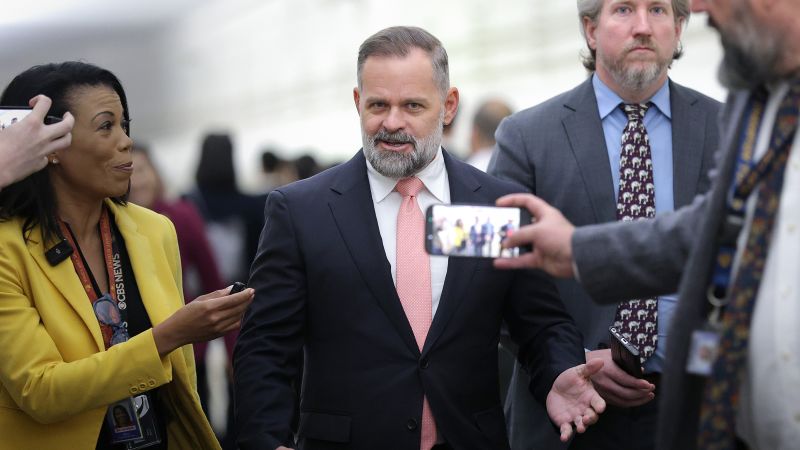
Trump-endorsed candidates lost Tuesday in the Wyoming governor’s race (Megan Degenfelder) and a pair of US House races in Florida (Rep. Cory Mills and Catalina Lauf). That now means:
-
6 of the 10 losers this year have lost in August alone. In addition to the trio on Tuesday, Minnesota governor candidate Mike Lindell, Tennessee Rep. Andy Ogles and Michigan congressional candidate Amir Hassan all lost.
-
5 Trump-endorsed candidates for governor have lost. Even in 2022, just 3 Trump-backed candidates for governor lost; his losses back then featured more minor statewide offices.
-
Trump’s endorsed candidates have now lost in 42% of the gubernatorial primaries where he wasn’t backing the incumbent (5 out of 12).
-
The 2026 primary season is also arguably worse for Trump than 2022 because that year’s losses were concentrated in one unusual state — Georgia, where the GOP establishment stood up to Trump’s false claims of massive voter fraud in the 2020 presidential election that he lost. In fact, 6 of the 12 losses by Trump-backed candidates in 2022 came in the Peach State alone. In addition, Trump is now an incumbent president.
-
Degenfelder in Wyoming and Lauf in Florida took 2 of the 3 of the lowest shares of the vote of any Trump-endorsed candidates to date. Degenfelder is currently under 30%, while Lauf is at 22%.
And it could get worse for Trump’s picks. It’s possible that the president’s losses could mount further in the weeks to come.
On the few remaining primary dates, Trump has backed Anthony DiLorenzo in New Hampshire’s 1st Congressional District, as well as appointed Sen. Darline Graham in the South Carolina special election next week.
While the trio of Trump-backed candidates was losing on Tuesday night, Graham was struggling through a debate with her primary runoff opponent, Rep. Ralph Northam. At one point, Graham admitted she was “not … that informed on national security,” punting awkwardly on a question about whether Taiwan is a national security issue for the United States.
If Graham were to lose, she would be just the fourth Trump-backed Senate candidate to lose a primary, after Alabama’s Luther Strange in 2017, West Virginia’s Evan Jenkins in 2018 and Utah’s Trent Staggs in 2024.
These primary losses also come — not coincidentally — as there is increasing evidence that GOP-leaning voters are growing frustrated with actions from a historically unpopular president.
A recent CNN poll found 30%, 40% and even 50% or more Republicans and GOP-leaning independents are registering discontent with Trump on some key issues.
And it seems this unhelpful narrative is starting to register with Trump.
In addition to double endorsing in the June primary runoff for South Carolina governor after it became pretty clear his candidate, Lt. Gov. Pam Evette, would lose, he issued a remarkable missive Wednesday morning about Mills’ loss in Florida.
“I told Congressman Cory Mills of Florida, a friend of mine, to get out of the Race, but he wouldn’t listen,” Trump claimed on social media. “He thought he could win, so who can blame him? We now have a great candidate, Ryan Elijah, running in his place!”
Of course, Trump didn’t apply this pressure publicly. And now it’s the latest evidence calling into question his domination of the party.
