
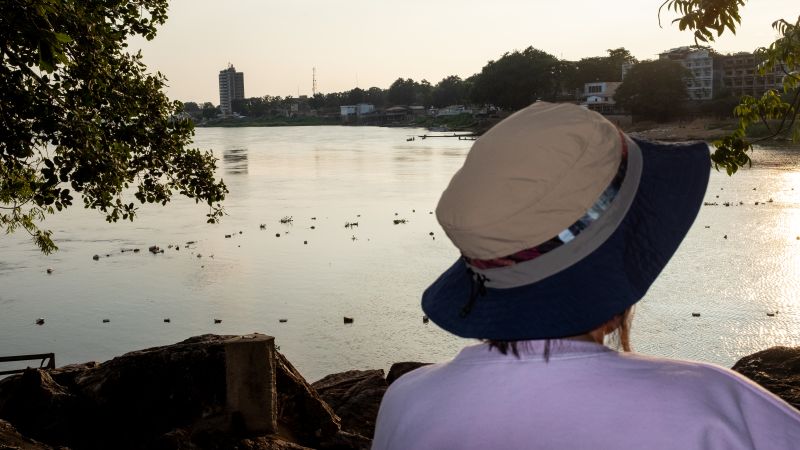
Bangui, Central African Republic
“It’s okay now, I’m safe,” she remembered thinking. “I can make one new life here.”
She described her joy at reaching “one of the best countries in the world,” but her happiness would prove fleeting.
Nika is among a growing number of migrants deported by the Trump administration to countries they’ve never been to – countries that can hardly be considered safe havens. It’s a loophole. Judges have stopped the US government from sending some migrants back to their home countries. So it has inked dozens of arrangements with third countries, where people like Nika are increasingly festering. Because she fears for both her and her family’s safety, Nika is a pseudonym.
Telling her story for the first time, Nika says she spent much of her youth protesting against the Iranian regime.
“I lost too much of my friends. They [the Islamic Republic] killed them. And some of them are still in prison,” she said tearfully. “I know if I was in Iran, they’re going to kill me.”
Her story unfolds at a remarkable time in US-Iran relations. Earlier this year, Iran was rocked by widespread anti-government protests. The regime launched an unprecedented crackdown, killing thousands. President Donald Trump encouraged protesters to “take over your institutions” and said, “help is on its way.”
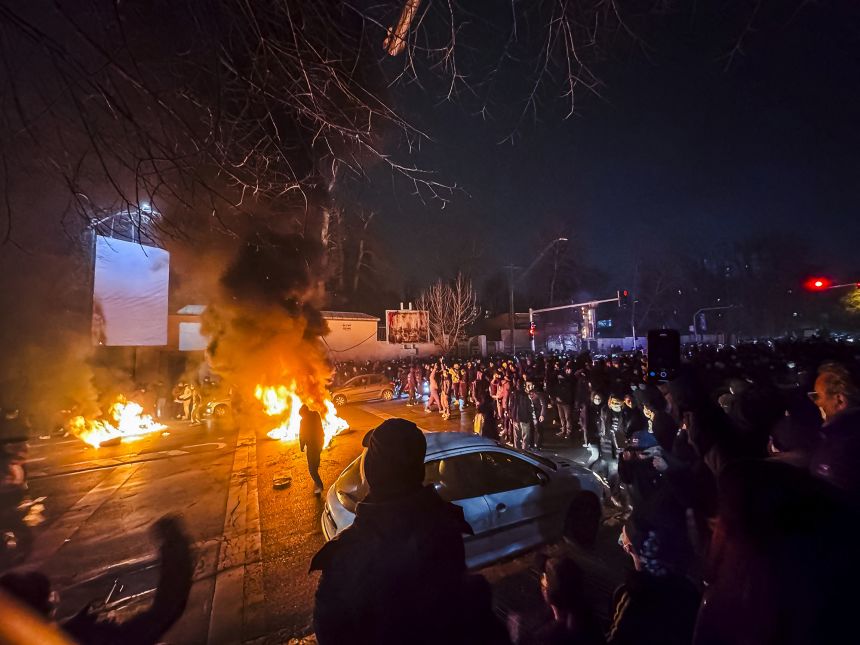
On the last day of February, the US and Israel launched a war on Iran, killing Supreme Leader Ayatollah Ali Khamenei and attacking targets across the country.
Nika followed the events closely from the United States. She allowed herself to hope it might mean the end of the Iranian regime, and a return home. In reality her fate had already been decided.
After being detained at the border and months in ICE detention, Nika had briefly been allowed to live freely in California. She received a Department of Homeland Security notice asking her to attend what she understood to be a routine meeting in June. But according to documents reviewed by CNN, US authorities had decided weeks earlier to deport her. When she attended the meeting, she was arrested.
Three days later, on the evening of June 11, she says she was handcuffed, shackled and placed on a deportation flight along with 17 other migrants, including those from Afghanistan, Iraq and Georgia.
“This is one of the very hard days in my life,” said Nika, describing how her whole body shook with fear. She said it was only on boarding the flight that she learned where she was going. The destination was shown on the small screen attached to the seat in front of her.
Sahar Jalili Pawelski, Nika’s current immigration lawyer, said she tried desperately to get her off the flight.
“I remember when the flight took off, I just sat on the floor, called my mom and cried. I live those moments. You know what that person must’ve been feeling. The loneliness she must have felt,” said Pawelski.
Like many of the other migrants she was deported with, Nika had won a protection order from an American judge. Such orders are intended to prevent migrants from being returned to places where they could face persecution, torture or death.
Until recently, it was extremely rare for people with these types of protection orders to be deported.
But since Trump returned to power last year, promising mass deportations, that’s all changed. Trump’s top anti-immigration advocate, deputy chief of staff Stephen Miller, has stated “America’s doors are closed, fully, to asylum seekers.”
The Department of Homeland Security has defended its actions, telling CNN in a statement that those deported received due process and had final orders of removal.
“These third country agreements, which ensure due process under the U.S. Constitution, are essential to the safety of our homeland and the American people. We are applying the law as written. If a judge finds an illegal alien has no right to be in this country, we are going to remove them. Period.”
Malaria and fear
Since her arrival in the Central African Republic’s capital city of Bangui over two months ago, Nika says that she’s usually too scared to leave her apartment block and spends most of her time in her room.
When she does go out to buy groceries or essentials, she claims the local police have often stopped her to demand bribes and threaten arrest if she doesn’t pay – claims the police denies. She’s also spent a stint at a local hospital, after contracting malaria.
“I couldn’t believe I’m here,” Nika said. “Really, for me this is unbelievable.”
The US State Department itself has advised against all travel to the country due to the risk of crime, kidnapping, disease and terrorism. It urges anyone who does make the journey to leave a DNA sample so they can be identified by their family in the event of their death.
Why the Central African Republic agreed to accept migrants from the US is still something of a mystery. No details of the deal have been made public.
But there are clues.
This year the US has given a surprisingly large $85 million to the UN’s International Organization for Migration’s (IOM) operations in the Central African Republic, up from just a few million in previous years, as well as committing an additional $50 million to the country’s Humanitarian Fund.
It comes at a time when the US is slashing foreign assistance.
The State Department has hinted that that funding was a direct quid pro quo for accepting deportees. A DHS spokesperson told CNN that “the United States will use foreign assistance to support countries that help us achieve our immigration priorities.”
The IOM, which does not facilitate deportations, did not reply to CNN’s specific questions but said in a statement it has a longstanding presence in the country. “As in other contexts, IOM benefits from funding from a range of donors in Central African Republic.”
No one in the CAR’s government has spoken publicly about the deportation agreement, and rebuffed CNN’s requests for an interview.
It’s unclear how life might unfold for Nika.
She and the migrants she arrived with were told they were only being granted a temporary, three-month stay. A second deportation flight to the country left the US on July 31, this time carrying 31 deportees, and there’s a fear among the migrants that, as accommodation runs out, they will be forcibly repatriated to their countries of origin.
If that were to happen, Nika does not rate her chances of survival.
Her lawyer, meanwhile, is filing a federal lawsuit in an attempt to get her back to the US and re-open her claim for asylum.
While Nika awaits her fate, she struggles to understand how the country she believed would protect her would be the one that sent her away.
