
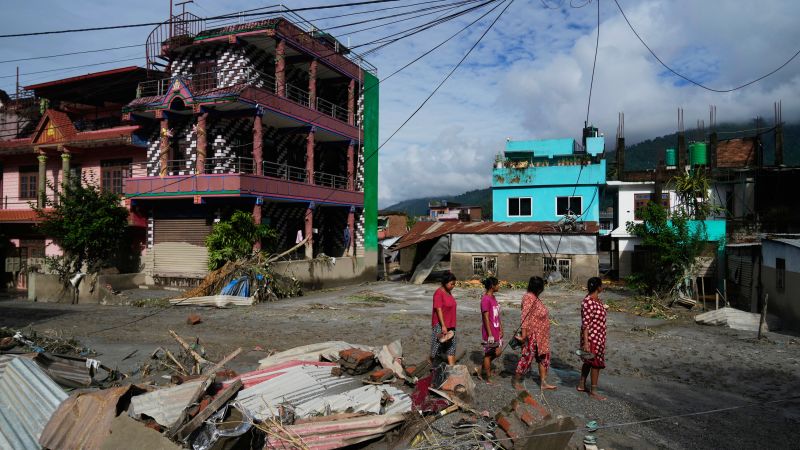
Video shared by a photographer on Chinese social media and geolocated by CNN captures where a large portion of glacier near Langtang Lirung peak broke along the Nepal-China border, causing a devastating avalanche and landslide.
In his post, the photographer wrote he heard the sound of the falling glacier around 10:30 a.m. local time on August 26, and at first mistook it for a military exercise.
Wednesday’s glacial collapse was so strong that it was initially reported by the US Geological Survey as a magnitude 4.4 earthquake.
Comparing satellite images from before and after the disaster, scientists have established that an enormous chunk of glacier sheared off from high on a mountain.
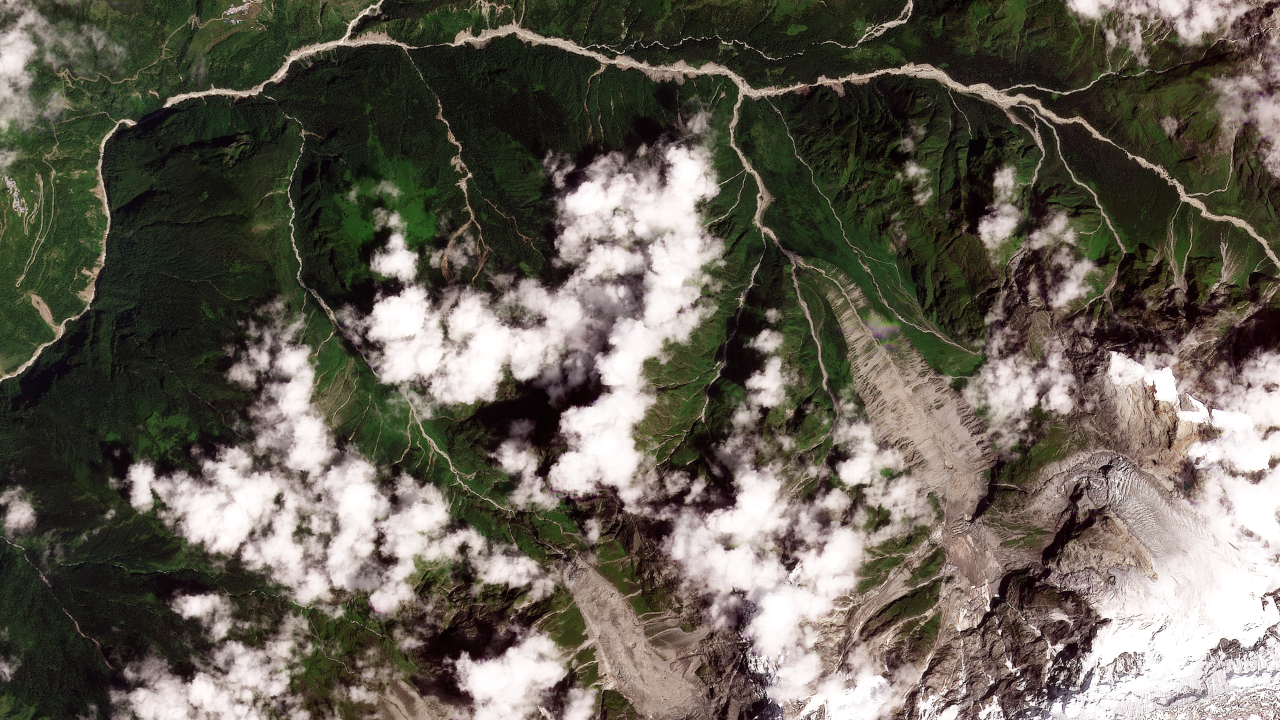
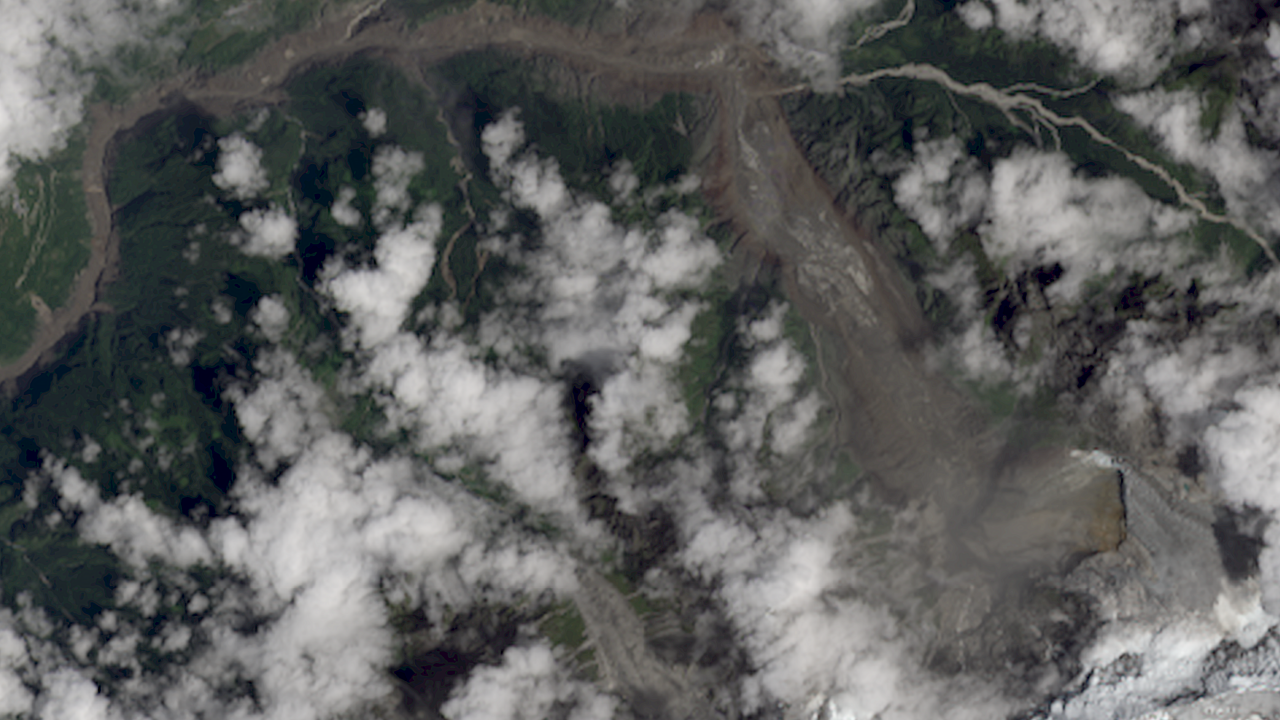
From there, it plunged to the river below — a roughly 7,000-foot vertical drop, a CNN analysis shows.
Though information on the volume of rock and ice that fell is not available yet, the section of the glacier that fell is approximately 2,000 feet wide, with a similarly sized section of rock next to it falling as well.
The sheared glacier left a 3,000-foot-wide gash in the mountainside, according to CNN analysis of satellite imagery.
The flood wave – a cascade of water, pulverized ice and rock – “descended the first 22 kilometers (13.7 miles) at an average speed of 193 kilometers per hour (120 mph),” said Jeffrey Kargel, a senior scientist at the Planetary Science Institute, a non-profit institute. That means it traveled nearly 14 miles in just 6 minutes and 50 seconds.
Scientists are still unpicking the exact causes of the devastating flooding.
CNN’s Laura Paddison and Thomas Bordeaux contributed reporting.
